
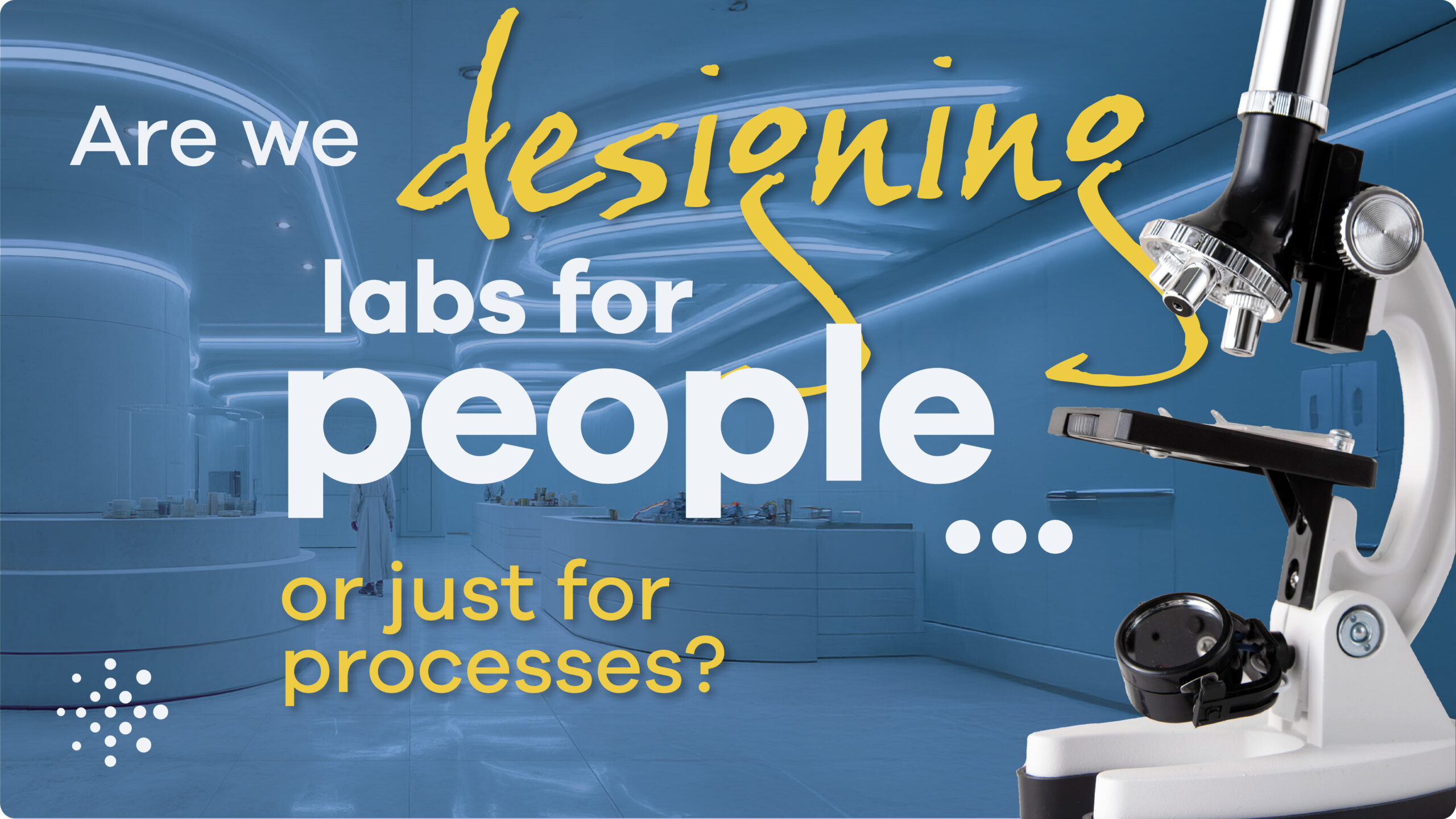
A shift in how we live and work
Certainly the future of both, our daily lives and science, is moving towards a scenario where people are at the center of everything.
Human-centered laboratories are becoming a key direction within this shift.
Over time, we have seen that the more comfortable we feel, the more productive we become, and the more motivated we are to take action.
When stability changes priorities
This is nothing new.
Philosophical thinkers and sociologists have long suggested that once a person achieves stability and has their basic needs met, they can begin to focus on other aspects, such as shaping their environment, appreciating art, or connecting with nature. When you are in survival mode, none of this feels important.
A connected world, shared expectations
This idea can be extended to a larger scale, such as society as a whole.
In an increasingly connected world, we are beginning to function more like a single organism.
Trends emerging in one part of the world, quickly spread to others.
As a result, in the context of the level of well-being we experience today, we can begin to prioritize aspects of everyday life that previous generations might have considered unthinkable.
For example, the integration of childcare facilities or gyms within workplaces, enabling employees to better balance their personal and professional lives.
From efficiency to people
This is why advancements in laboratory environments are increasingly placing people at the center (human-centered design), positioning them as the key element in every work process.
This translates into ergonomics, product design, and technologies that simplify workflows — all aimed at making the entire value chain more efficient and agile at every stage.
Sustainability as a natural evolution
At the same time, there is a growing awareness of environmental impact.
Today, we have the technology and knowledge to make manufacturing, transportation, and assembly processes more sustainable, replacing methods that were once far more rudimentary.
We are selecting better materials and developing processes that are more respectful of the environment, for example, working with strategic partners across different locations to reduce transport distances, or designing modular furniture (one of the leading trends this year) to avoid complex construction work and unnecessary waste.
Designing human-centered laboratories
All of this results in adaptive environments that are easy to reconfigure and combine, allowing employees themselves to modify their workspace without disruption, without mess, and without losing valuable working time.
The real impact on people
The ultimate outcome is clear: enabling employees to become more autonomous within their work environment, to take on greater responsibility by reducing operational burdens, to organize themselves more effectively, and to remain productive regardless of fluctuations in workload.
It also helps reduce stress, foster collaboration, and create a more balanced way of working.
What employees value today
If everything feels easier, it becomes easier.
As highlighted in Gensler’s newsletter (march 2026), employees increasingly value more “intangible” aspects of the workplace, such as:
– Everyday conveniences (childcare facilities, gyms, food services)
– Visually appealing environments
– Agility both in physical spaces (moving furniture, creating new layouts) and at a more strategic level (leaders who think long-term and provide stability).
– The integration of AI into processes to enhance efficiency is also becoming a key factor.
Rethinking the future of laboratories
Do you think the future of laboratories lies in putting people at the center, or are we still prioritizing efficiency above all else?
You can join the conversation at our LinkedIn profile
Thanks for reading, 🔬
IBR.