
If research is no longer a rigid process, why are the spaces where it happens still so fixed?
Research laboratories are, by nature, collaborative environments where disciplines intersect and processes are in constant motion.
As we zoom out, the complexity increases: instrumentation, disposable materials, logistics, manufacturing… a technical ecosystem that is permanently shifting and demands precision, coordination, and adaptability.
The role of space
Within this system, one element often remains unnoticed, yet it defines how everything operates: space.
A laboratory can be equipped with the most advanced technology, but if its layout does not respond to evolving workflows, friction appears.
- Processes slow down
- Teams adapt to the space instead of the space adapting to them
At best, it results in reduced efficiency. At worst, it can limit research potential, execution speed, and team wellbeing.
Designing for change
A well-designed research environment anticipates constant change. Today, research is accelerating through Artificial Intelligence and the digitalization of workflows. The question is therefore inevitable:
Shouldn’t our physical environments evolve at the same pace?
From furniture to infrastructure
This is where furniture stops being a passive element and becomes an active research infrastructure.
A modular, agile working system that can be reconfigured without structural intervention, adapting quickly to the evolution of the project, the team, or the scientific process.
Primary System®
At IBR, we have developed Primary System®: a modular system designed as an open infrastructure where each element can be reconfigured, expanded, or adapted without redesigning the space.
A system that grows
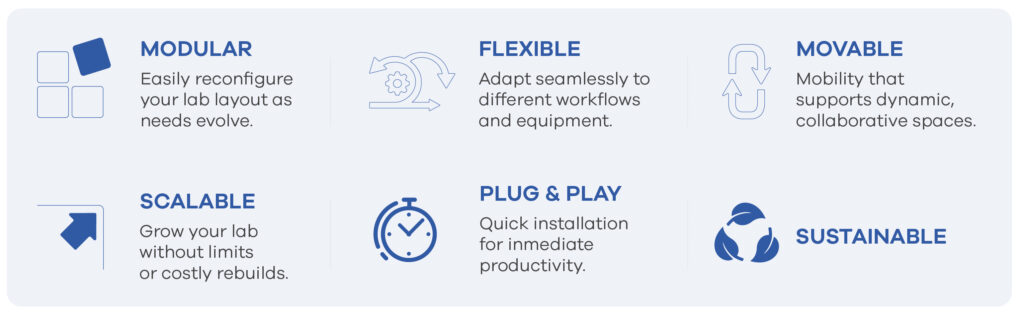
The system is built on a set of core principles that guide every design decision across our work:
With one base frame, endless lab scenarios. Example configuration built from our Primary Bench:
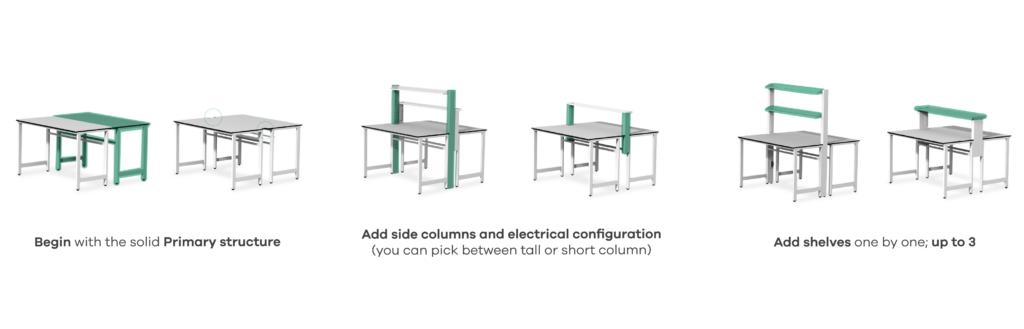
Each component amplifies the system rather than replacing it.
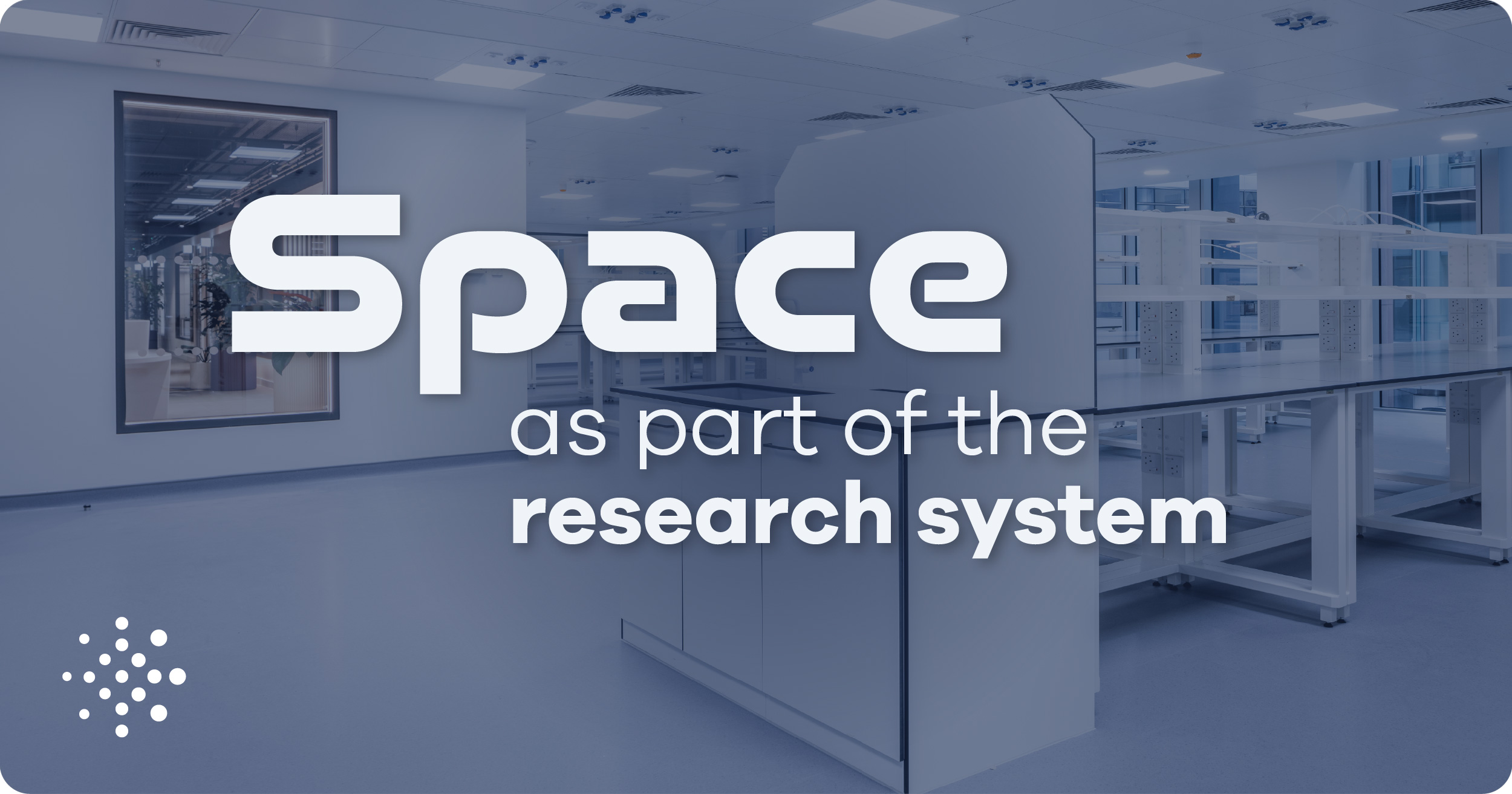
Space as a tool
A way of understanding space not as something fixed that constrains work, but as another tool within the research system itself: capable of transforming without interrupting the workflow.
To explore this and more, join the conversation on our LinkedIn profile.
Thanks for reading, 🔬
IBR.