
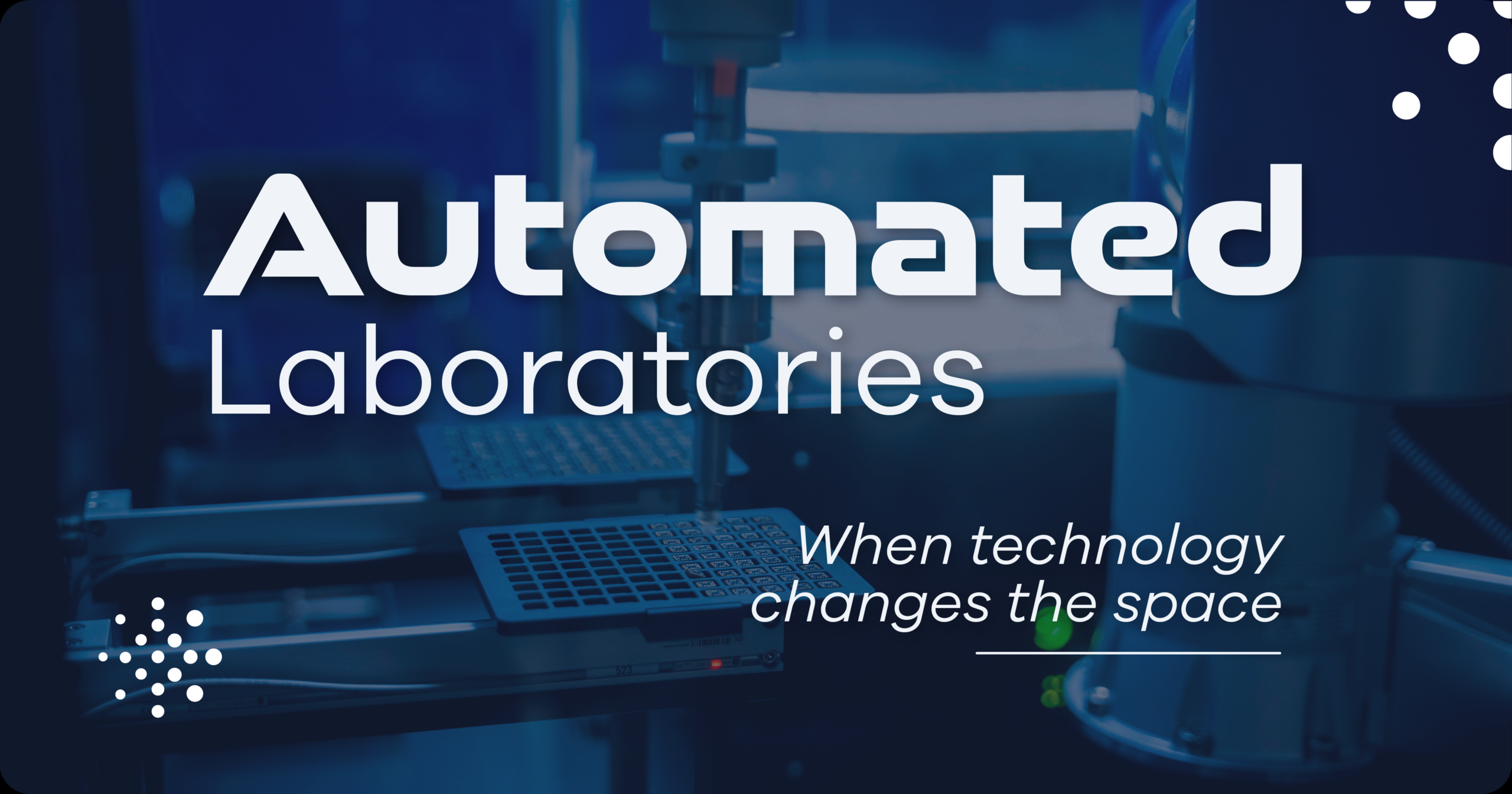
What happens to the physical workspace when laboratories become increasingly automated?
This month, several events coincide around one of the topics currently gaining the most attention in Pharma: new technologies, automation and artificial intelligence, and how all of them are changing the way we work in laboratories.
At the beginning of November, Lab Innovations 2026 will also take place, where AI & Automation will once again be one of the main topics of conversation.
In our latest Beyond Labs articles, we have talked a lot about user experience, ergonomics, modularity and how laboratory spaces can adapt as needs change. But as robots, new equipment and automated systems become increasingly present in these environments, another question arises:
What role do space and furniture play in all of this?
Introducing automation into a laboratory immediately affects the physical space around it.
Automation needs space too.
When we think about laboratory automation, attention usually goes directly to what the technology can do: process samples, perform repetitive tasks, generate data or make workflows faster.
But every piece of technology also has a physical presence.
As Gensler explains when discussing the future of laboratory automation [1], introducing new technologies means considering the equipment together with the workflow, spatial design and infrastructure required for it to operate correctly.
A mobile robot may need specific flooring conditions and enough room to move through the laboratory, a new instrument may require additional electrical or data connections, automated systems may change storage requirements, increase the number of consumables being used or require additional access for maintenance. Automation has physical consequences.
And those consequences should ideally be considered before the equipment arrives.
Gensler points to the importance of considering the entire life cycle of automation, from initial implementation to future upgrades and replacement [1].
If the physical environment cannot accommodate those changes in the future what should have been a technological improvement can result in renovations, additional costs, downtime or even the premature replacement of elements that were not designed to adapt.
The process first, the technology second.
Another important aspect to consider is the workflow itself. This is also addressed by Lab Design News in its article on next-generation automated laboratories [2].
One of its central ideas is quite simple: automating an inefficient process does not necessarily make that process better.
That is why they recommend analysing the workflow with the people who actually use the laboratory before selecting an automation platform.
How do samples move through the space?
Where do people move?
Where do processes slow down?
And which parts of that workflow actually make sense to automate?
One of the conclusions from the article sums up this approach particularly well: “Design for automation categories, not individual products.” This brings us back to something we have discussed many times in Beyond Labs: flexibility.
It may not always be the most visible element of a smart laboratory, but it can be one of the factors that determines how successfully that laboratory evolves. The ability to move, reorganise or adapt the elements within a space can make it much easier to incorporate new equipment or respond to new ways of working. That’s why user experience should always remain a key consideration.
We do not need to predict exactly what instruments will look like in five or ten years. The objective is simpler: to preserve as much capacity for change as possible.
As Lab Design News also points out: “Automation is not a one-time installation, it’s an evolving system.” And if the system evolves, the physical laboratory needs to be able to evolve with it.
And what about people?
With so much attention being given to robots, automation and artificial intelligence, it may seem as though the human factor is becoming less important. In reality, our role changes with it.
Automation can take over certain repetitive or time-consuming tasks, allowing scientists to dedicate more time to activities that require analysis, experimental design, decision-making or creativity. At the same time, new profiles are becoming part of the laboratory environment: robotics technicians, data specialists, software engineers and other professionals whose needs may be quite different from those of traditional laboratory users.
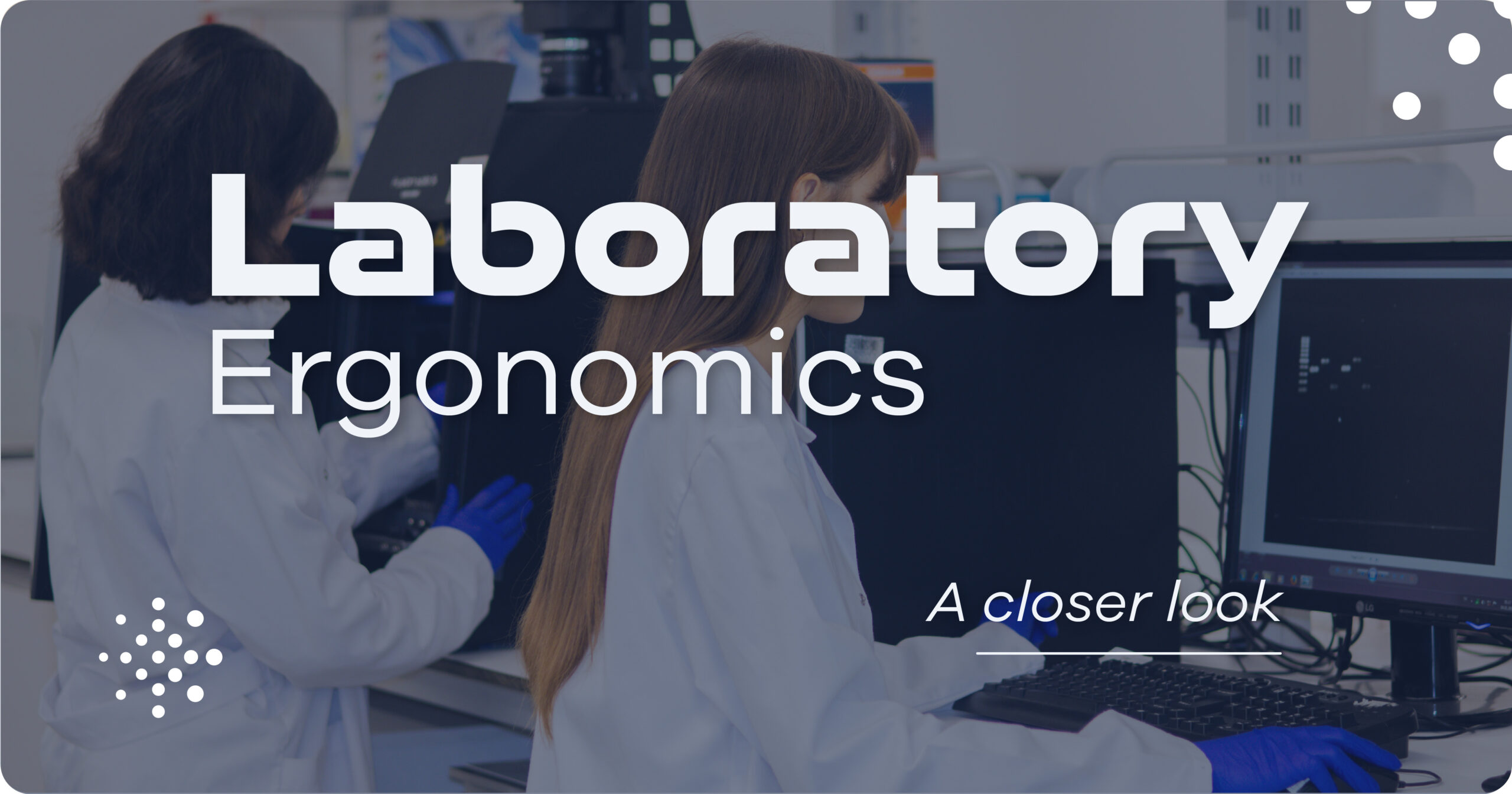
So even as laboratories become more automated, we still need to think carefully about how people experience and interact with the space. This is something we have already explored in Beyond Labs through ergonomics and human-centred design.
But as technology becomes more complex, that conversation also becomes broader. Working height, posture and reach are all part of User Experience. So are the way people move through the space, use the equipment around them and adapt when the way of working changes.
And this conversation is not new. As far back as 2007, research around usability in laboratories was already discussing the importance of designing laboratory technology around the people who would actually use it. Almost twenty years later, perhaps the question has simply evolved.
2007 – How do we make laboratory technology adapt to the user?
2026 – How do we make the entire laboratory environment support the interaction between user and technology?
That shift changes the scale of the conversation. We are now looking at the relationship between people, technology and the whole physical environment surrounding them.
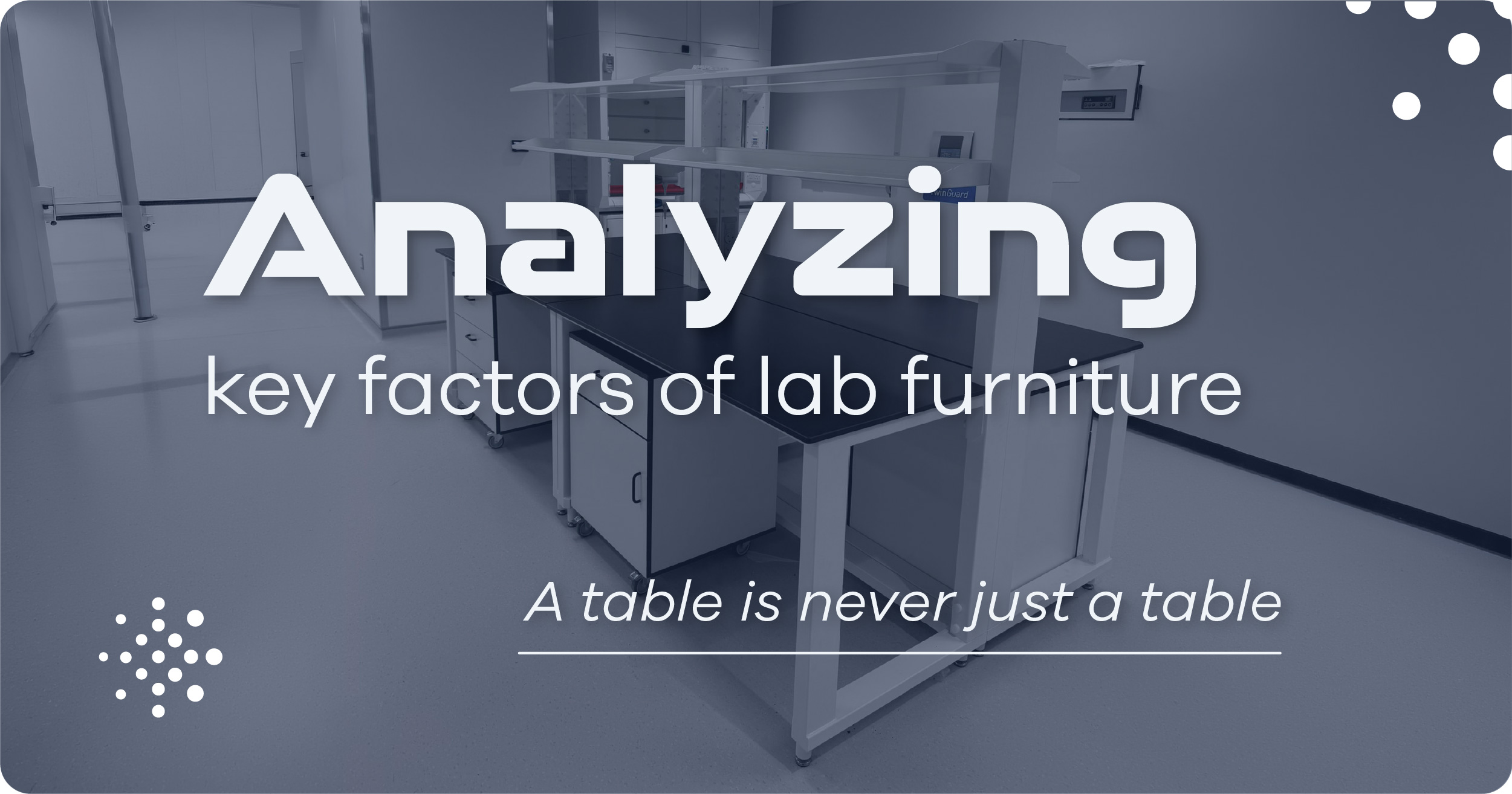
So, what role does furniture play?
Laboratory furniture sits right in the middle of this relationship between people, technology and space.
For the Perkins&Will article Scientists Speak Up! [3], scientists were asked directly what worked and what did not work in their laboratories.
One of the observations was that the traditional laboratory bench has changed relatively little over the past few decades, and that even some systems described as flexible are not always regularly readjusted to meet the individual needs of different users.
If people change, equipment changes and the way we work changes, should the way we think about laboratory furniture change too?
A laboratory bench is part of that wider environment.
It supports equipment, determines where certain activities can take place, affects how users move, reach and work, interacts with storage, utilities and accessories… And when the equipment changes, the furniture may also need to change with it.
As laboratories become increasingly connected, adaptable and automated, furniture can also begin to play a more active role in supporting the interaction between people, equipment and space.
How far that interaction could go is a question we will continue exploring over the coming weeks.
Designing between people and machines.
Perhaps this will be one of the main challenges for laboratory design over the next few years.
Reorganising an entire laboratory around every new robot, instrument or technology that appears would make little sense. The challenge will be to create environments where people, technology and space can coexist and evolve together.
We do not know exactly what the next piece of equipment, robot or artificial intelligence system to enter our laboratories will be. We can, however, make sure that the decisions we make today leave enough room for those changes tomorrow.
To explore this and more, join the conversation on our LinkedIn profile.
Thanks for reading,
IBR.
References
[1] Gensler – The Future of Lab Automation: Opportunities, Challenges, and Sustainable Design Solutions https://www.gensler.com/blog/future-of-lab-automation-opportunities-challenges-solutions
[2] Lab Design News — Designing for Automation: Lessons Learned from the Next Generation of Smart Laboratories
https://www.labdesignnews.com/content/designing-for-automation-lessons-learned-from-the-next-generation-of-smart-laboratories
[3] Perkins&Will — Scientists Speak Up!
https://perkinswill.com/news/scientists-speak-up/