

Talking about sustainability is not simply about stating concern for the environment. When a company claims to be “sustainable”, there are many factors to consider beyond a well-crafted narrative about the future. Sustainability must be embedded in everyday operations and decision-making processes.
Starting at the Beginning: Manufacturing
The first step is manufacturing. More and more companies are striving to adopt sustainable materials and production processes to minimize environmental impact. However, in many technical environments such as laboratories, it is not always possible to rely on fully ecological materials. In these cases, durability becomes a key factor. Extending product lifespan and reducing the need for replacement is, in itself, a meaningful way to lower environmental impact.
Local and Strategic Supply Chains
Beyond manufacturing, supply chain decisions play a critical role. Collaborating with local or strategically located manufacturers and distributors helps reduce transportation needs and, consequently, carbon footprint. It can also improve efficiency, reduce costs, and strengthen long-term partnerships.
Design and Installation: Building for Adaptability
At the installation stage, sustainability is strongly influenced by how the space is designed and how equipment is selected.
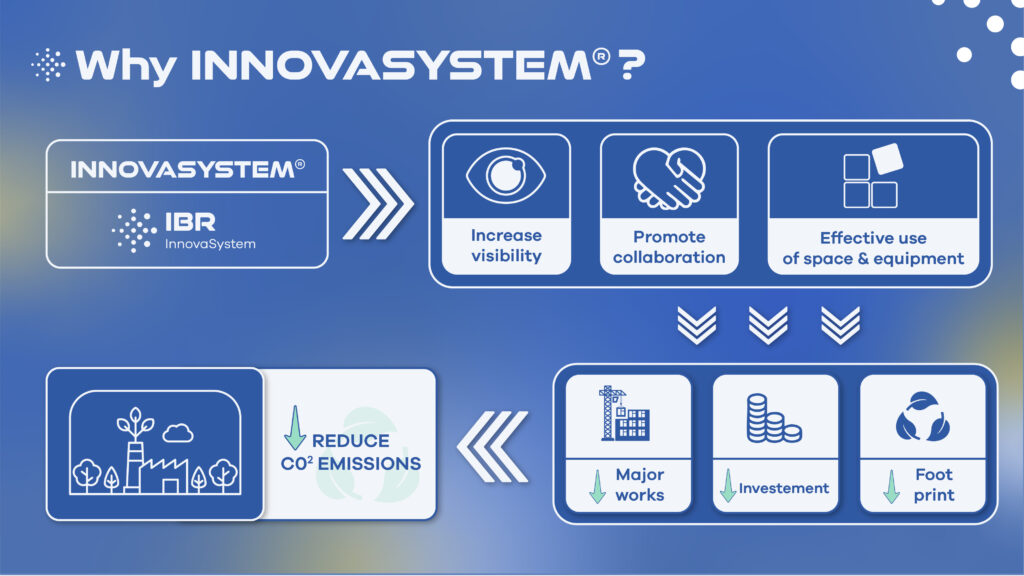
Efficient space planning allows laboratories to anticipate future needs, reducing the likelihood of costly modifications or expansions. In parallel, selecting adaptable and modular equipment enables laboratories to evolve without requiring full replacements.
Technologies such as Plug & Play systems further support this adaptability by reducing installation times and avoiding complex interventions that generate waste and operational downtime. A laboratory that can evolve without being dismantled is, by definition, a more sustainable one.
Thinking Long-Term: Lifecycle Matters
Designing with purpose means thinking beyond immediate needs. Investing in durable, high-quality equipment that can adapt to changing requirements is essential to extending lifecycle and minimizing environmental impact over time.
Operational Decisions: Sustainability in Practice
Sustainability does not end once the laboratory is operational. Daily decisions also play a key role.
For example, in chromatography, different analytical techniques can achieve similar results but with varying implications in terms of resource consumption, efficiency, and sustainability. This is the case with HPLC (High Performance Liquid Chromatography), UHPLC (Ultra High Performance Liquid Chromatography), and SFC (Supercritical Fluid Chromatography).
There is no single optimal solution. The choice depends on the application and operational context (ICH, 2005).
- HPLC remains widely used due to its robustness, reliability, and lower maintenance requirements, making it suitable for routine analysis and established environments (Snyder et al., 2010).
- UHPLC offers higher speed and resolution while reducing solvent consumption per analysis, improving operational efficiency and sustainability, although it requires higher initial investment and more advanced technical conditions (Swartz, 2005; Guillarme et al., 2010).
- SFC presents strong sustainability potential by significantly reducing the use of organic solvents through the use of CO₂ as the primary mobile phase (Lesellier & West, 2015; Welch et al., 2010). However, its applicability is not universal and requires specialized expertise.
For this reason, many laboratories adopt hybrid approaches, selecting the most appropriate technique depending on the analysis. This allows optimization of resources while maintaining performance and advancing toward more sustainable practices.
Laboratory Furniture as Part of the System
In this context, laboratory furniture plays a key role. Chromatography benches are not merely support structures, but active elements in laboratory performance and efficiency. Choosing robust, durable, and adaptable solutions ensures stability for techniques such as HPLC or UHPLC, while reducing the need for replacements and modifications over time.
Understanding laboratory furniture as part of a broader system is another step toward creating more sustainable environments.
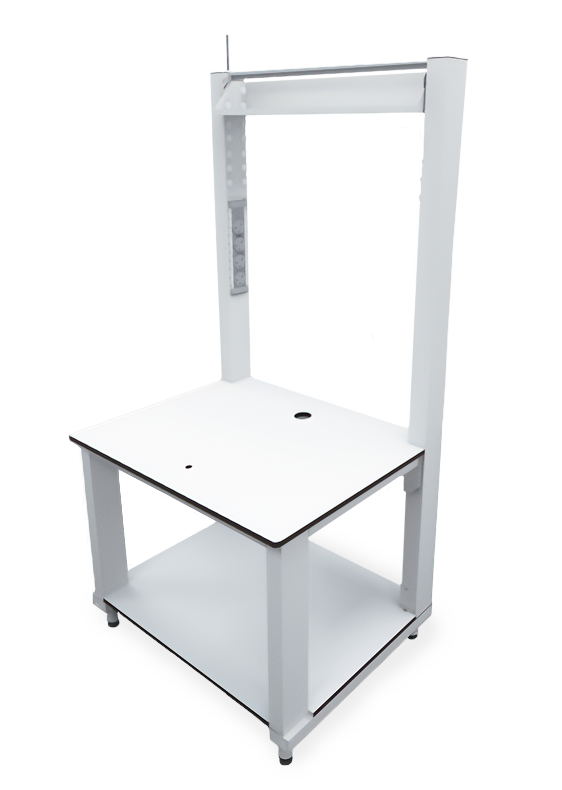
Example of an HPLC bench by IBR®.
For technical specifications and further information, please visit our Products page.
Conclusion
Sustainability in life sciences is not about ideal solutions, but about informed decisions. There is not always a perfect option, but there are better choices depending on context, use, and lifecycle.
Understanding these variables is what enables laboratories to become more efficient, more adaptable, and ultimately more sustainable.
To explore this and more, join the conversation on our LinkedIn profile.
Thanks for reading, 🔬
IBR.
References
- International Council for Harmonisation (ICH). (2005). Q2(R1): Validation of Analytical Procedures.
- Snyder, L. R., Kirkland, J. J., & Dolan, J. W. (2010). Introduction to Modern Liquid Chromatography. Wiley.
- Swartz, M. E. (2005). UPLC™: An introduction and review. Journal of Liquid Chromatography.
- Guillarme, D., et al. (2010). UHPLC: Impact on pharmaceutical analysis. Journal of Pharmaceutical and Biomedical Analysis, 51(3), 538–550.
- Lesellier, E., & West, C. (2015). Journal of Chromatography A, 1382, 2–46.
- Welch, C. J., et al. (2010). Greening analytical chromatography. TrAC Trends in Analytical Chemistry, 29(7), 667–680.